Technical Parameters
| Laser Wavelength | 1064 nm |
| Frequency Range | 1 – 600 KHz / 20 – 200 KHz |
| Pulse Length | 200 ns / 50 – 100 ns |
| Spot Diameter | 7 ± 0.5 mm / 6.5 ± 1 mm |
| Beam Quality | < 1.5 / < 1.6 |
| Engraving Depth | 0.1 – 1.0 mm |
| Working Temperature | 0 – 40 °C |
| Cooling Mode | Air Cooling |
| Working Environment | Dry, clean & ventilated |
| Working Power | 220V / 110V, 50 / 60Hz |
Model Configuration
| Model | Working Size (mm) | Laser Power (optional) | Total Power (W) | Cutting/Engraving Speed |
|---|---|---|---|---|
| Fiber Laser Marking Machine DF-G | 750 x 1750 / 300 x 300 | 20W / 30W / 50W / 100W | 600 / 1000 / 2000 | 1000 mm/s |
| UV Laser Marking Machine DF-UV | 750 x 1750 / 300 x 300 | 20W / 30W / 50W / 100W | 800 / 1000 / 1200 | 1000 mm/s |
| CO2 Laser Marking Machine DF-C | 750 x 1750 / 300 x 300 | 20W / 30W / 50W / 100W | 600 / 800 / 1000 / 1200 | 1000 mm/s |
Custom non-standard specifications available (unit: mm)
Where this machine fits in production
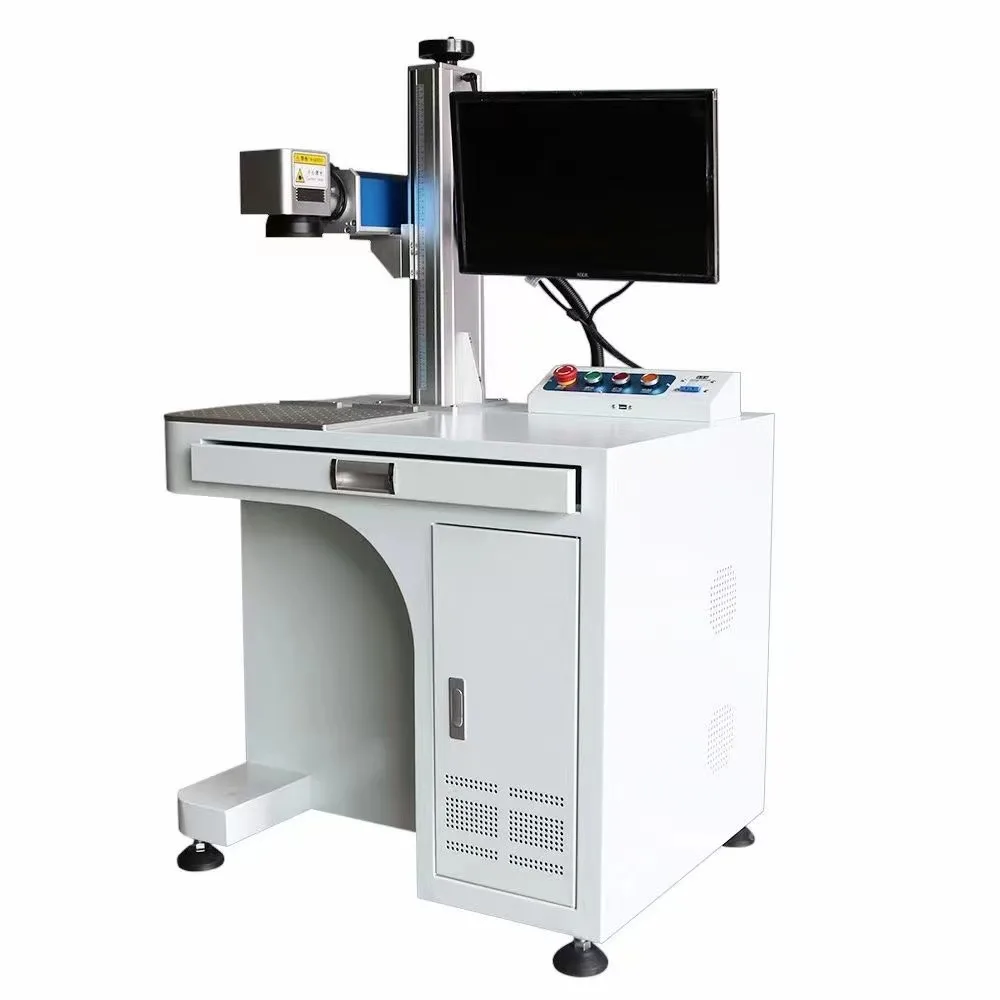
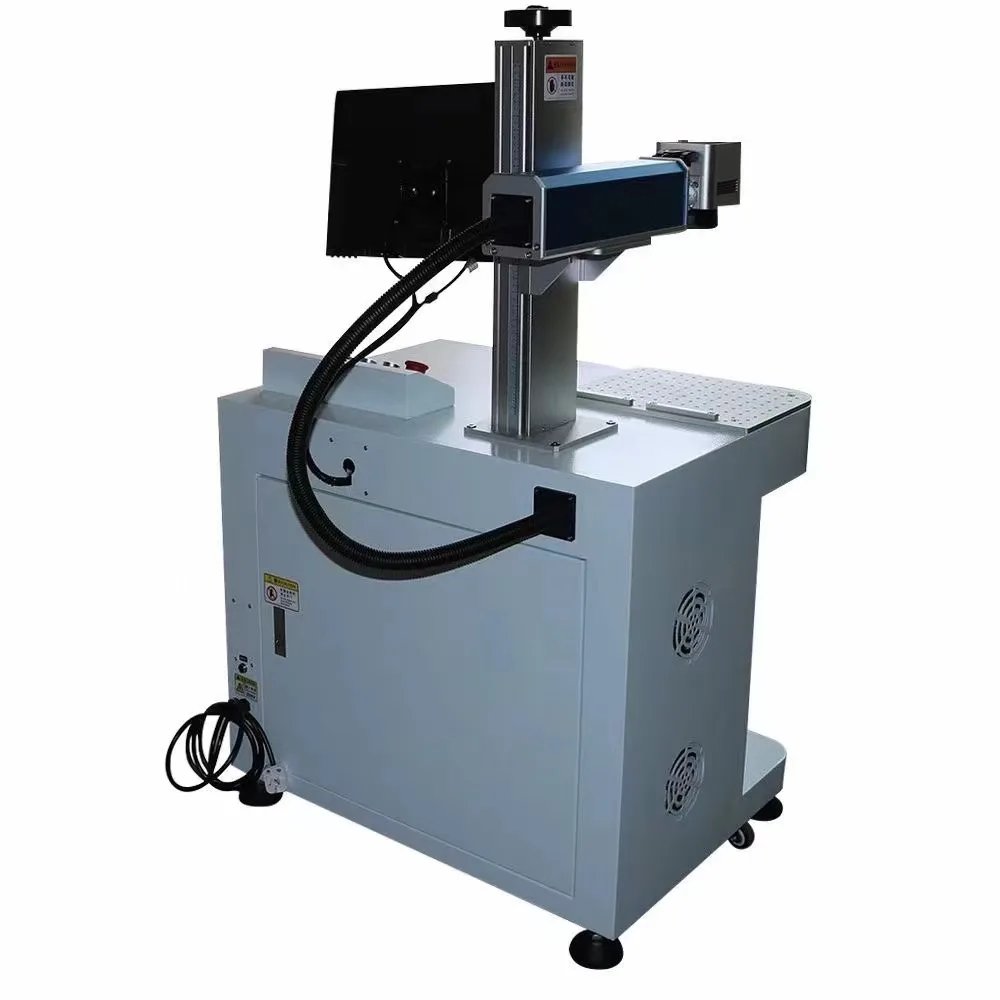
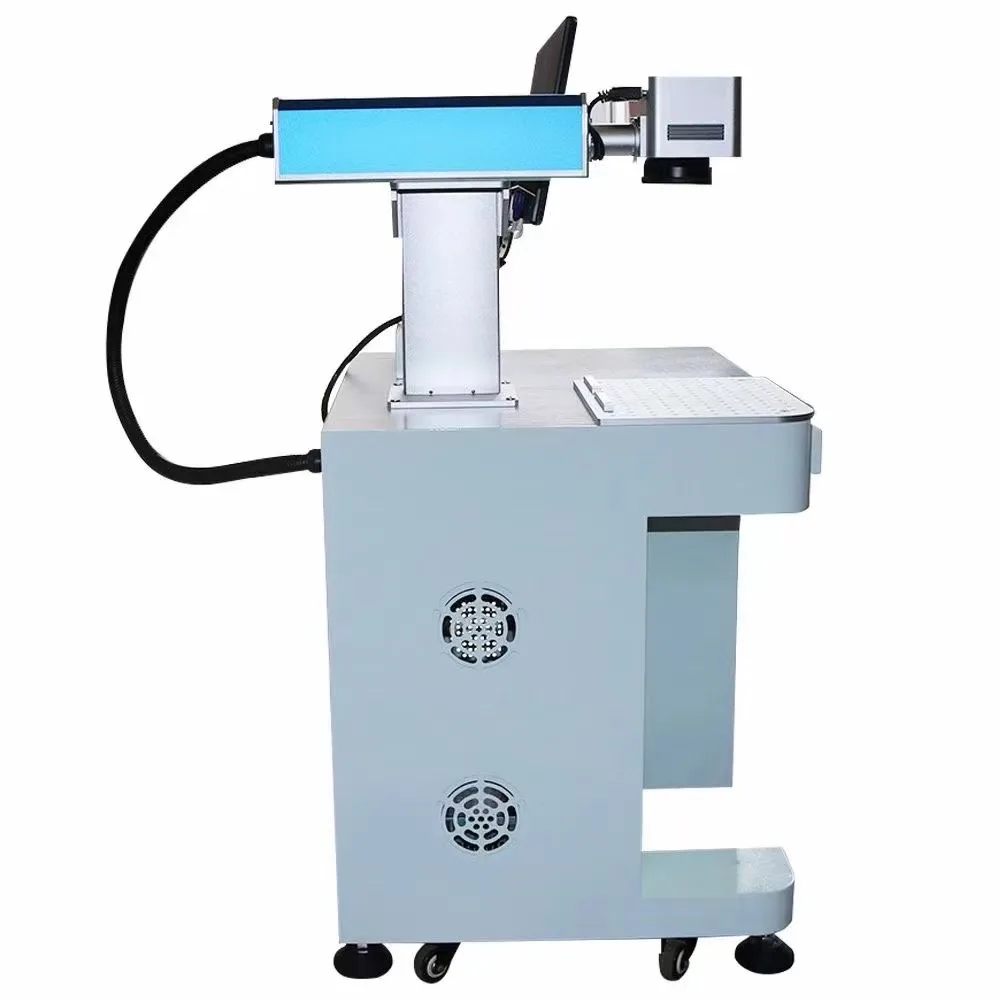
The Static Laser Marking Machine is designed for parts that are loaded by hand rather than fed on a conveyor. It can be configured with fiber, UV or CO2 laser sources, so the material and marking effect determine the correct source and lens. It is suitable for large or heavy parts and for production where the operator positions each item under the marking head.
How to choose the right configuration
Select the laser source from the material and marking target, not from the machine size alone. Fiber, UV and CO2 systems interact differently with metals, plastics, glass, coatings and organic materials. The lens, working area and software should then be matched to the part size and the smallest detail that must be reproduced. A sample test is the best way to confirm contrast, depth and cycle time.
Operation and maintenance essentials
Keep the lens and marking area clean, set the focus for each part height and confirm that the exhaust or fume extraction suits the material. Run a test mark on a scrap piece before starting production, then check the position and contrast of the first article. Routine checks should include the cooling or air supply, focus mechanism, control software and safety interlocks described in the manual.
Before ordering
Send the material, part dimensions, marking content and required contrast before ordering. If the part is coated, anodized or supplied in different colours, include a photo and identify the surface that will be marked. The final quotation should confirm the laser source, lens, working area, software, voltage and training arrangement.
Frequently Asked Questions
01What kind of warranty and long-term support do you offer?
Every Dingfeng machine is covered by a 12-month warranty plus lifetime maintenance support. If a fault occurs during the warranty period, we supply the replacement parts; after the warranty we continue to provide spare parts and technical support at cost price.
02How long does production and delivery take?
For standard models, production usually takes 7 to 15 days after the deposit is received. For customized configurations or special voltage requirements, allow around 20 days. The exact date is written into the contract.
03How is the machine packed and shipped?
Every machine is packed in an export-grade wooden case with moisture-proof and shock-proof protection inside, suitable for long-distance sea freight. We send you photos of the packing and container loading, together with the shipping documents.
04Do you provide installation, training and after-sales service?
Yes. Each machine is delivered with an English manual and video guides, and our engineers support you online during installation and commissioning. When necessary, our after-sales engineers can travel to your factory to help with installation and training. Spare parts and technical support are available for the life of the machine.
05How can I get a quotation?
Tell us your material, working width, required output and destination port. Our sales team will recommend a suitable configuration and send you a quotation.
06What size of workpiece can it handle?
Static machines are designed for large or heavy parts loaded manually; the working area depends on the model.
07What materials can it mark?
Wood, acrylic, leather, glass, plastics, rubber and coated metals.
08When should I choose static over galvo?
When your parts are large, heavy, or loaded by hand instead of moving on a conveyor.