
A CO2 laser cutter needs routine checks because the laser source, optics, motion system and cooling system are sensitive to heat, dust and contamination. Many serious failures begin as small issues: a dirty protective lens, low water flow, a dry guide rail or weak exhaust. Addressing them early reduces downtime, protects components and keeps cut quality consistent.
Quick answer: Check cooling water, air assist, lens, nozzle and bed cleanliness daily; inspect rails, belts, exhaust and chiller filters weekly; and check optics, water quality and wear parts monthly. Always follow the manufacturer’s manual for the specific machine.
Maintenance schedule at a glance
| Frequency | Key checks | Stop or escalate if |
|---|---|---|
| Daily | Water level and temperature, water flow, air assist, lens and nozzle, bed cleanliness | Water-flow alarm, damaged lens, weak extraction or abnormal noise |
| Weekly | Guide rails, racks, belt tension, exhaust fan, duct condition, chiller intake filter | Loose belt, grinding noise, leaking water or blocked exhaust |
| Monthly | Optical spot check, chiller condenser, water quality, tube mounts and wear parts | Off-center beam, water leak, burnt smell or abnormal noise |
Daily Maintenance: Before Startup and After Shutdown
A daily check usually takes 10-15 minutes and focuses on water, air and optics.
Before startup: Check cooling water (Chiller).
The laser tube and optical lenses of a laser cutter rely on water cooling. Turn on the chiller and check that the water level is between the minimum and maximum marks. Check the water temperature as well. Many CO2 systems are normally set around 22°C-25°C, but always follow the chiller and laser manufacturer’s recommended range and keep the water above the dew point to prevent condensation. If the water temperature is too high, laser power will drop significantly or trigger a thermal alarm. Also, check for excessive bubbles in the water pipes. Bubbles indicate air leaks in the pump or blockages in the lines. The system must be purged before operation; otherwise, it will cause localized overheating in the laser tube.
Before startup: Check auxiliary gas and pressure.
Look at the air compressor pressure and check for water accumulation in the water separator. Low pressure not only prevents cutting through materials but also fails to blow away molten slag. Once molten slag spatters onto the protective lens, it will instantly destroy the lens.
After shutdown: Clean the worktable and waste collection bin.
Accumulated dust and debris (like fabric dust or wood chips) can easily ignite upon contact with the high-temperature laser. Before leaving work, use a vacuum or brush to clean the worktable and waste bin to maintain safety.
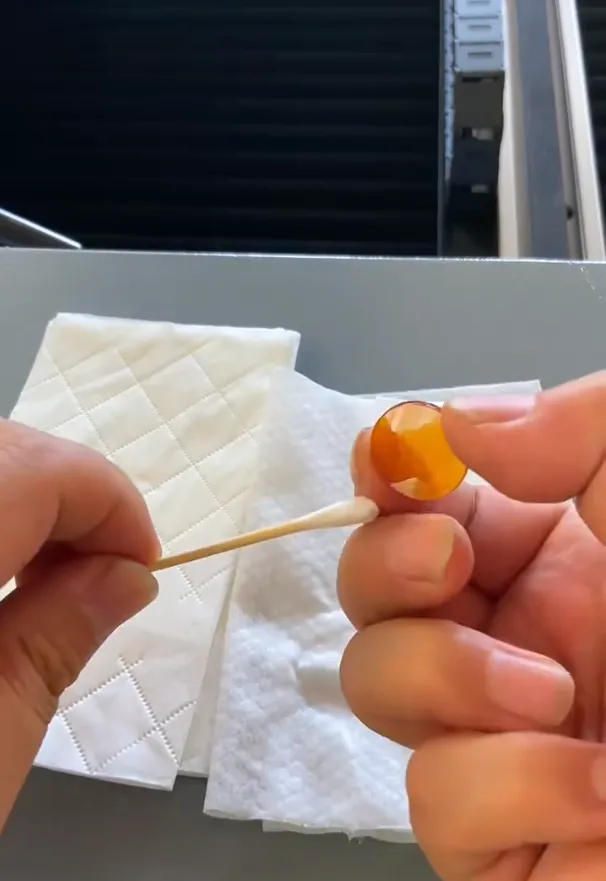
After shutdown: Clean the protective lens (Crucial).
There is a protective lens below the focusing lens, serving as the last line of defense against smoke and dust. Daily, use absolute ethanol (99%+ concentration) and lens tissue to gently wipe the protective lens. Never skip this step. If the lens is contaminated, laser energy will be absorbed and converted into heat, reducing cutting performance and potentially damaging the lens. For machines with a CCD camera, also keep the camera window clean and check it for dust or smoke residue.
Weekly Maintenance: Focus on Mechanical Transmission and Fume Extraction
Set aside a short weekly inspection period; the time depends on machine use and dust levels. Focus on mechanical parts that are often hidden by dust.
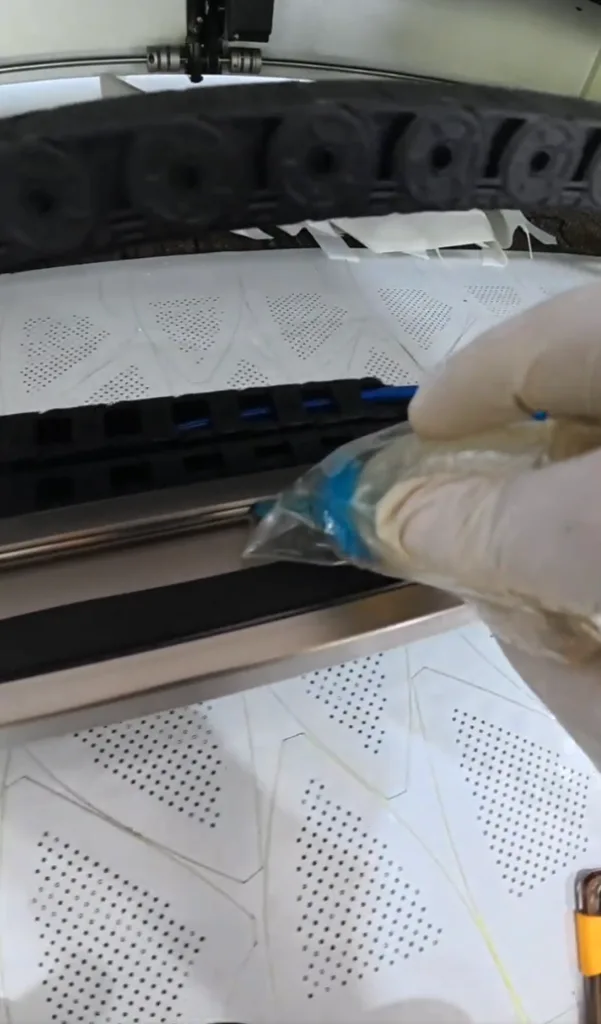
Lubricate guide rails and racks.
Open the dust covers of the X and Y axes. Use a clean non-woven cloth to wipe away old, blackened grease from the rails, then apply specialized guide rail oil evenly. If the rails feel rough to the touch, they need oiling. Use a brush to clean dust from the racks and apply lubricating grease. Lack of oil increases resistance, causing grinding noises and inaccurate cuts (circles become ovals, squares become irregular).
Check timing belt tension and wear.
Pluck the belt to check for looseness. If it is too loose, high-speed cutting can cause step loss and misaligned cutting paths. Check for frayed edges or cracks and have replacements ready to avoid mid-production breakage.
Clean the exhaust fan and fume ducts.
Smoke generated from cutting fabric, wood, or acrylic is highly sticky. Weekly, check the exhaust fan blades for carbon buildup and inspect the ducts for blockages. If extraction is weak, the workshop fills with smoke (a health hazard), and the optical path gets rapidly contaminated, causing frequent lens replacements.
Clean the chiller’s air filter.
If the intake filter on the back of the chiller is clogged with dust, cooling efficiency drops drastically. Remove the filter and blow it out with compressed air or rinse it clean.
Monthly Maintenance: Optical Path Checks and Deep Inspection
Monthly inspections require machine downtime for a deep physical of core components, ensuring cutting quality.
Optical path spot check.
Place masking tape in front of the first mirror, fire a test pulse and check whether the mark is centered. Repeat at each mirror and at the focusing lens. A centered spot supports a vertical cut edge and consistent kerf width. Adjust the mirrors only when the spot is clearly off-center or after replacing or moving optical components, and follow the manufacturer’s procedure.
Clean the chiller condenser.
Open the side panel and check for a thick layer of dust on the condenser fins. Blow it out with compressed air or clean it with a specialized cleaner. A dirty condenser reduces cooling efficiency, leading to high water temperatures, which lowers laser power or triggers alarms.
Check the laser tube and water quality.
Inspect the ends of the glass laser tube for white water scale. If present, water quality is poor, and the system needs flushing with purified water. Check for displacement in the tube mounts and leaks at the water pipe clamps.
Frequently Asked Questions
What should I use to clean the cutting lens?
Use a lens cleaner approved by the machine or lens manufacturer. If 70% ethanol or isopropyl alcohol is approved, use a clean product without oils or fragrance and dry the lens immediately. Higher-purity anhydrous grades are often preferred because they leave less residue. Use lens tissue or a suitable swab and wipe in one direction; do not scrub in circles or scratch the coating.
Can I add tap water directly to the chiller?
No. Tap water contains minerals that can form scale in the cooling circuit and reduce cooling efficiency. Use distilled or deionized water as specified by the chiller manufacturer. In humid conditions, keep the chiller temperature above the dew point to prevent condensation.
How do I know if the optical path is aligned properly?
The most intuitive way is to look at the cut edge. A vertical, consistent test cut usually indicates a centered beam. A beveled edge, unusually wide kerf or changing cut quality can indicate that the optical path or focus needs inspection.
How often should the protective lens be replaced?
There is no fixed replacement interval. Replace it if it cannot be cleaned, has burn spots or shows coating damage. A damaged protective lens can allow debris and heat to reach the more expensive focusing lens, so replacing it early is cheaper than risking further optical damage.
When to Stop the Machine
- The chiller reports low flow, overheating or a temperature alarm.
- The protective lens or focusing lens is cracked, heavily contaminated or visibly damaged.
- Smoke extraction fails or strong fumes enter the workspace.
- You notice a burnt smell, smoke or abnormal noise.
- The beam spot is clearly off-center or cut quality changes suddenly.
Related Machine and Maintenance Guides
- CO2 laser cutting machines
- High-speed fabric laser cutting machine
- Auto-feeding fabric laser cutting machine
- CO2 laser cutting felt: clean edges and machine selection
Review note: This maintenance guide was prepared by the Dingfeng Laser Technical Team for CO2 fabric laser cutting equipment. Maintenance intervals and settings should always be checked against the machine manual and the actual production environment.
Conclusion
Maintaining a CO2 laser cutter boils down to four elements: “Water, Air, Optics, and Rails.” Daily lens cleaning and water level checks determine if the machine can operate smoothly. Weekly lubrication and extraction cleaning dictate precision maintenance. Monthly optical and cooling checks help protect the core components over time. Make maintenance a daily habit, and the machine will reward you with fewer defects and a longer lifespan.
About the Dingfeng Laser Technical Team
The Dingfeng Laser Technical Team supports machine selection, installation, operator training, preventive maintenance and after-sales service for CO2 laser cutting equipment.