Why Is Cutting Printed Fabrics So Difficult?
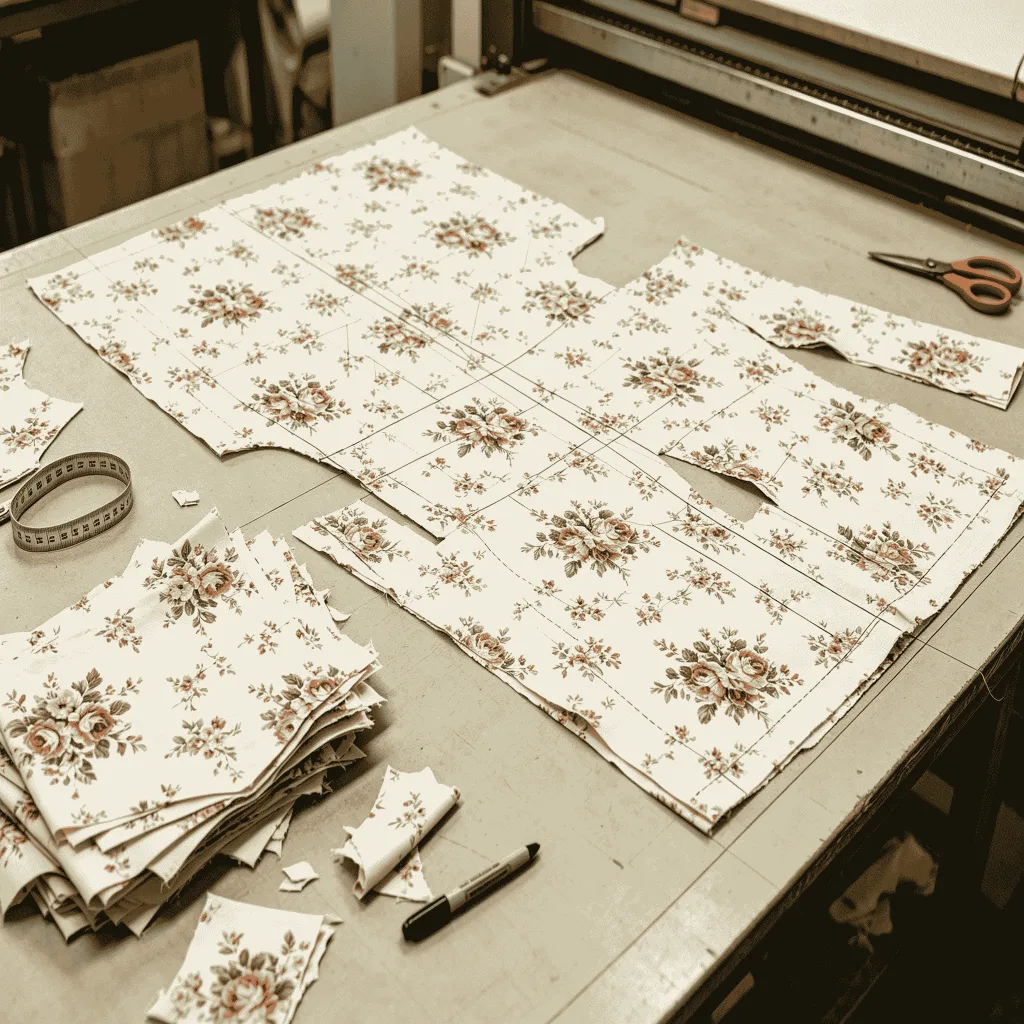
The biggest difference between cutting printed fabrics and regular fabrics is this: every single piece must align perfectly with the printed pattern.
Jersey numbers, swimsuit patterns, cycling wear logos—even a slight misalignment can ruin an entire piece of fabric. This not only wastes material but also severely impacts production efficiency and delivery schedules.
Traditional cutting methods face several insurmountable challenges when it comes to printed fabrics:
Challenge 1: Pattern Positions Are Not Fixed
Printed fabrics undergo slight stretching and shifting during the printing and conveying process. On the same roll of fabric, the position of the same pattern can vary by several millimeters. Traditional cutting methods can only cut at fixed positions—they cannot detect or compensate for these deviations.
Challenge 2: Manual Registration Is Inefficient
Many factories rely on workers to visually locate patterns and manually adjust the fabric. This method is not only slow but also heavily dependent on worker skill. A single worker can only cut a limited number of pieces per day, and fatigue leads to errors.
Challenge 3: Irregular Patterns Are Difficult to Handle
Jersey numbers, swimsuit pieces, and cycling wear patterns are often irregular shapes. Traditional scissors or electric round knives struggle to cut complex curves precisely. Die cutting works but requires a new die for every new design—costly and time-consuming.
The root of all these problems: traditional cutting methods simply cannot “see” where the patterns are.
How Does a CCD Vision Laser Cutting Machine Solve These Problems?
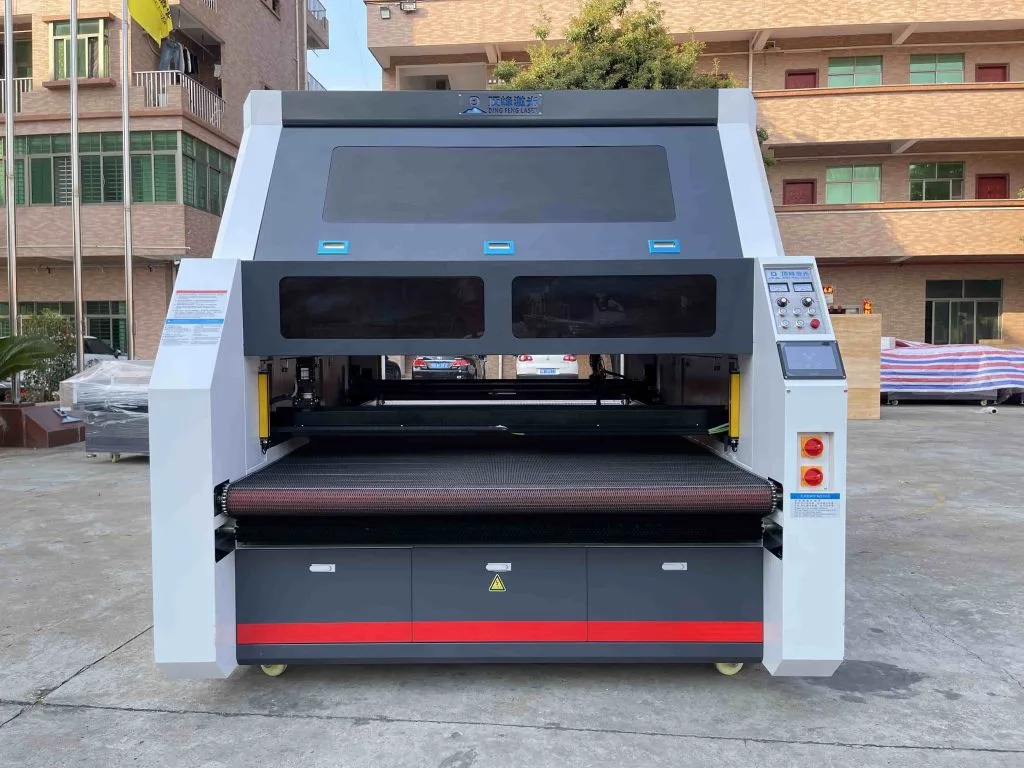
A CCD vision laser cutting machine uses an industrial-grade high-definition camera to capture printed patterns on fabric in real time, automatically recognizing contours and generating cutting paths. The machine “sees” where the patterns are and precisely cuts along the pattern edges.
Core Workflow:
-
Image Capture: Industrial-grade HD camera scans the fabric surface to capture printed patterns
-
Contour Recognition: Vision recognition software automatically identifies pattern edges
-
Path Generation: Automatically generates cutting paths, supporting irregular shapes and mixed layouts
-
Laser Cutting: CO₂ laser cuts along the recognized paths—capture and cut on the fly
The entire process requires no manual registration—the machine does it all automatically.
Core Technical Advantages of CCD Vision Laser Cutting
1. Automatic Recognition – No Manual Registration Required
Traditional methods require workers to visually locate patterns and manually register them. CCD vision laser cutting machines automatically scan, recognize, and register using a high-definition camera. Workers simply load the material—the machine handles the rest automatically.
2. High-Precision Cutting with Accuracy Under 0.1mm
The CCD vision system achieves repeat positioning accuracy of ±0.1mm. For products with strict positioning requirements like jersey numbers and swimsuit patterns, this level of accuracy is simply unattainable with manual cutting.
3. Cut Any Irregular Shape – No Dies Required
Whether round, square, or complex irregular shapes, CCD vision laser cutting machines can accurately recognize and cut them all. No custom dies are required—simply import the design file and start cutting.
4. Support Mixed Layout Cutting – High Material Utilization
Different sizes and shapes of patterns can be mixed and cut within the same layout. Intelligent nesting software automatically optimizes arrangement to maximize material utilization. 3-4 different sizes and specifications can be mixed in a single layout, improving material utilization by 15%-20%.
5. Smooth Edges – No Secondary Finishing Required
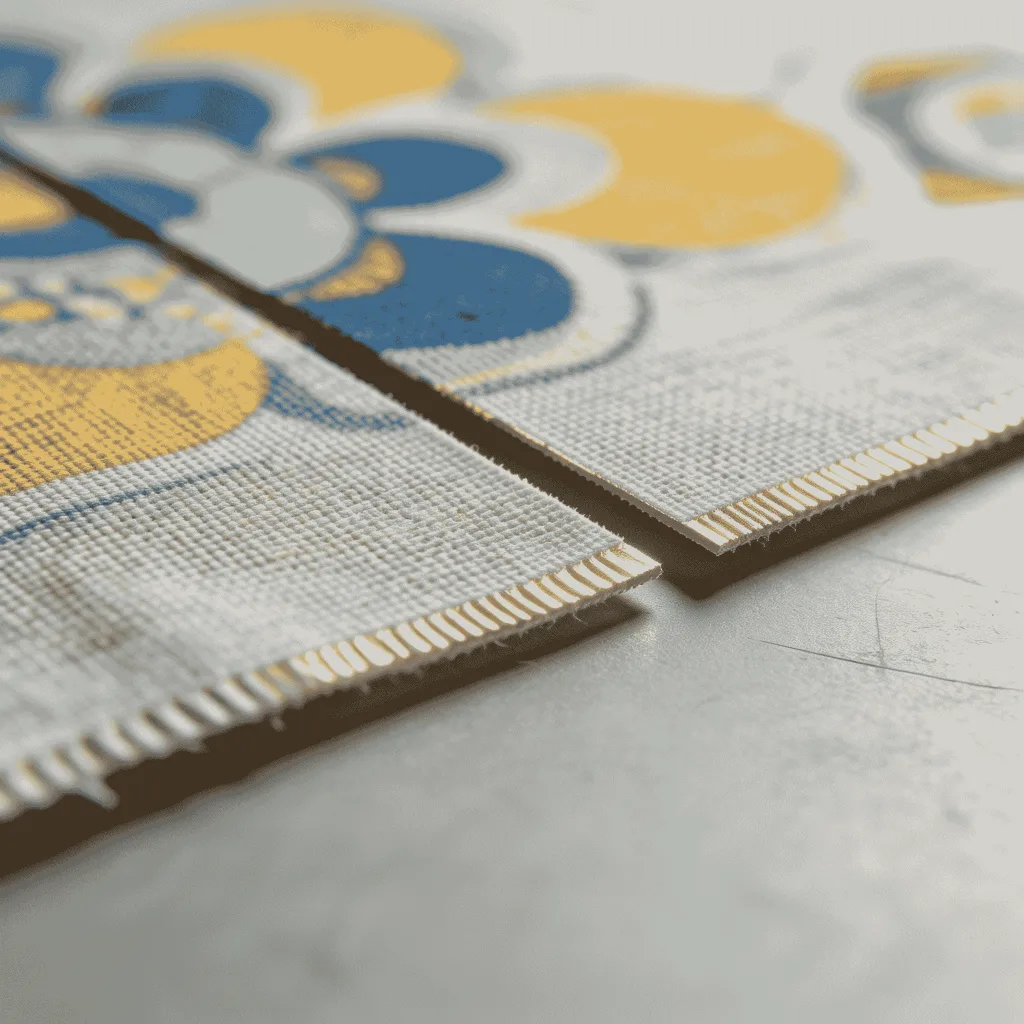
CO₂ laser cutting is a non-contact process that applies no mechanical pressure—fabric does not deform or stretch. The cutting edge is automatically sealed, with no fraying, loose threads, or yarn pull. This advantage is especially significant for delicate materials like lace and mesh that tend to unravel easily.
Efficiency Gains: One Machine Replaces 3-5 Skilled Workers
Based on actual production data, the efficiency advantages of CCD vision laser cutting machines are significant:
| Comparison | Manual Scissors | Electric Round Knife | CCD Vision Laser Cutting |
|---|---|---|---|
| Registration Method | Manual visual alignment | Manual visual alignment | CCD automatic recognition |
| Cutting Accuracy | ±2-5mm | ±1-3mm | ±0.1mm |
| Changeover Time | Several hours | Several hours | Minutes (no dies required) |
| Labor Required | 5 workers | 3 workers | 1 operator |
| Irregular Shapes | Difficult to cut | Dies required | Cut directly |
| Material Utilization | Low | Medium | High (intelligent nesting) |
One machine operated by a single person can replace 3-5 skilled cutting workers.
Applications
CCD vision laser cutting machines are particularly suitable for the following printed fabric cutting applications:
-
Sportswear: Jersey numbers, cycling wear patterns, swimsuit pieces, fitness apparel prints
-
Digital Sublimation Printing: Custom T-shirts, hoodies, dress printed pieces
-
Embroidery and Lace: Embroidery patches, chenille patches, precision lace cutting
-
Banners and Advertising: Automatic cutting of digitally printed flags
-
Small-Batch, Multi-Variety Orders: E-commerce custom orders, fast fashion flexible production
Conclusion
The efficiency bottleneck in printed fabric cutting is not about cutting speed—it’s about not being able to “see” where the patterns are.
CCD vision laser cutting machines use intelligent vision recognition to let the machine “see” patterns, automatically register, and cut with precision—fundamentally solving the efficiency and quality challenges of irregular printed fabric cutting.
One machine with one operator can replace 3-5 skilled cutting workers. Compared to traditional die cutting, there is no need for dies and changeover is instant, with material utilization improved by 15%-20%.
For garment manufacturers transitioning to digital printing and flexible production, CCD vision laser cutting machines have become a critical competitive advantage.
Related products: Panoramic CCD Laser Cutting Machine · High-Speed Fabric Laser Cutting Machine · Roller Heat Transfer Machine ZS-BF
Cutting printed fabric and worried about accuracy? Send us a sample photo.