アパレルプリント業界は変化を遂げました。デジタル昇華プリントの登場により、メーカーはカスタムデザインを迅速かつ効率的に生産できるようになりました。しかし、この変化は生産面での大きな課題ももたらしました。それは、すべての柄が裁断ラインと完全に一致しなければならない中で、プリントされた生地をどのように正確に裁断するかということです。
従来の型抜き加工では、この問題を解決できません。プリントされたパターンは、印刷、搬送、取り扱いの過程でずれてしまうことがあります。わずかな位置ずれでも、ロット全体を台無しにしてしまう可能性があります。そのため、世界中のアパレルメーカーが、CCDビジョンシステムを内蔵したCO2ファブリックレーザー切断機を採用し始めています。
Traditional die-cutting cannot solve this problem. Printed patterns shift during printing, conveying, and handling. Even minor misalignment can ruin an entire batch. This is why garment manufacturers worldwide are turning to CO2 fabric laser cutting machines with integrated CCD vision systems.
What Is a CO2 Fabric Laser Cutting Machine?
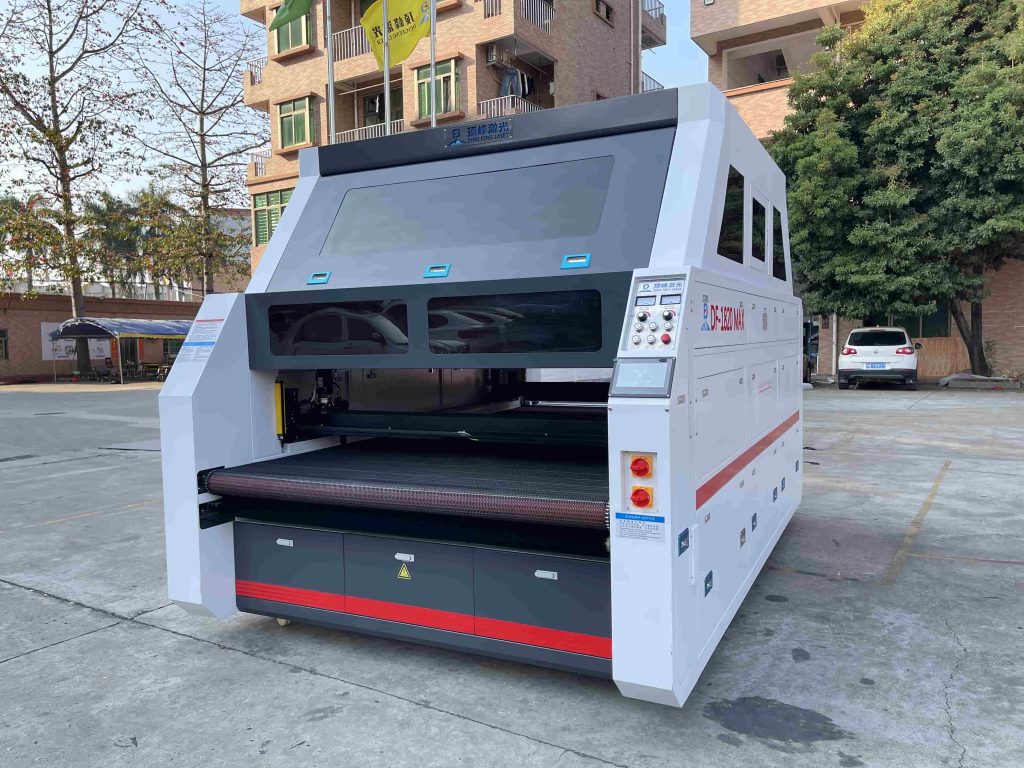
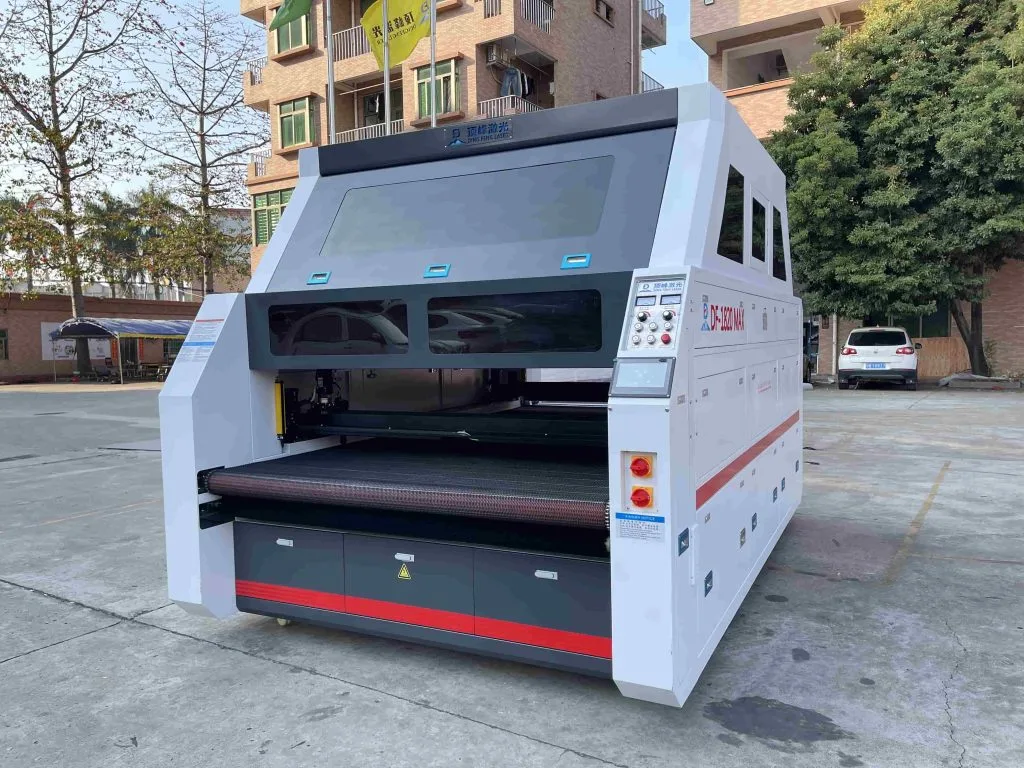
A CO2 fabric laser cutting machine is a specialized industrial tool designed for cutting non-metallic materials using a sealed CO2 laser tube as the energy source. Unlike mechanical cutting, the laser beam does not physically touch the fabric. There is zero mechanical pressure, so materials do not stretch, distort, or deform during processing.
The laser simultaneously cuts and seals the fabric edge. This prevents fraying, eliminates the need for secondary finishing, and delivers a clean, professional result that meets the quality standards of modern apparel brands.
CO2 vs. Fiber Laser: Why CO2 for Fabric?
It is important to distinguish between CO2 and fiber laser technologies:
-
CO2 Laser: Non-metals (fabric, wood, acrylic, plastic, rubber, leather)
-
Fiber Laser: Metals (stainless steel, copper, carbon steel, aluminum)
For textile materials—cotton, silk, polyester, non-wovens, felt, leather, mesh, and synthetic blends—CO2 laser cutting is the only proven, industry-standard solution.
The Role of Panoramic CCD Vision
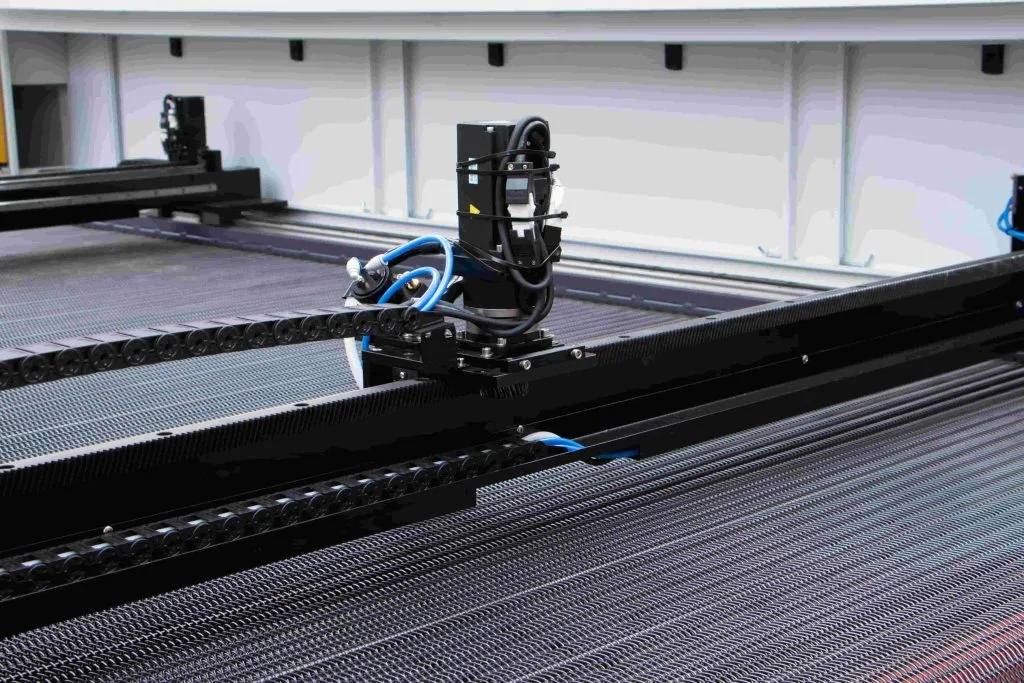
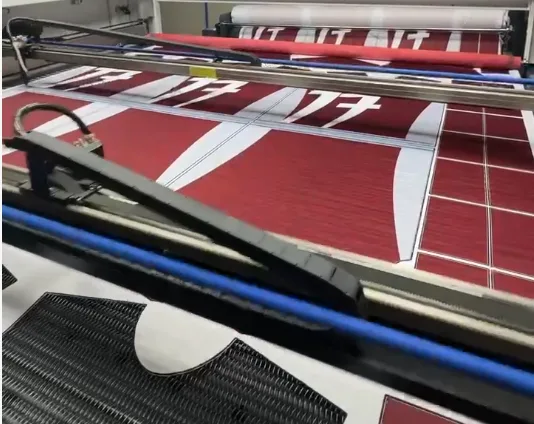
When cutting sublimation-printed fabrics, the laser must follow the actual printed pattern—not a fixed template. A panoramic CCD vision system with a high-resolution camera mounted on an LED light tower automatically senses the printed outline across the entire fabric surface and generates cutting paths in real time.
Panoramic vs. Non-Panoramic: The Key Difference
-
Camera: Panoramic system uses high-resolution camera on LED tower; Non-panoramic uses none or small camera beside head
-
Pattern detection: Panoramic offers full fabric surface auto-sensing; Non-panoramic is manual or software pre-programmed only
-
Accuracy for sublimation: Panoramic is high with real-time pattern registration; Non-panoramic is low and cannot compensate for fabric drift
-
Efficiency: Panoramic is high with batch cutting and no manual intervention; Non-panoramic is low and requires manual alignment for each piece
For large-format sublimation printing or multi-pattern layouts, a panoramic system is essential. Non-panoramic machines cannot detect printed patterns, so they cut pre-programmed shapes regardless of where the actual design sits on the fabric.
Four Key Benefits for Garment Manufacturers
1. Precise Pattern Registration
Printed fabrics shift during stretching, feeding, and conveying. The CCD vision system detects these deviations in real time and adjusts the cutting path automatically. This delivers positioning accuracy of ≤ 0.05mm—critical for jerseys, swimwear, cycling wear, and custom sublimated apparel where the design must align exactly with the cut.
2. Handles Elastic and Stretch Fabrics
Lycra, spandex, and knit materials are challenging for traditional cutting. Mechanical dies stretch and distort the fabric. Laser cutting applies no pressure, and the CCD system compensates for any deformation—ensuring the cut matches the printed design regardless of material stretch.
3. Clean, Sealed Edges – No Fraying
The CO2 laser melts fiber ends as it cuts, producing a sealed edge that does not fray, yellow, or scorch. This is especially important for polyester mesh, synthetic blends, and fabrics used in high-performance sportswear.
4. No Tooling – Fast Design Changeover
Switching between patterns requires nothing more than uploading a new file. No physical dies or molds are needed. This makes CO2 laser cutting ideal for:
-
Short-run production
-
Custom orders
-
Fast-fashion brands
-
E-commerce fulfillment
You can cut dozens of different patterns in a single batch without any downtime for tool changes.
Technical Specifications
The following specifications are based on actual production models from Dongguan Dingfeng Intelligent Equipment Co., Ltd.
-
Model Series: DF-1812 / DF-1818 / DF-1822 / DF-1832 / DF-1918
-
Laser Type: Sealed CO2 Laser Tube
-
Laser Power: 80W – 150W (configurable)
-
Cooling System: Water-Cooled
-
Vision System: Panoramic CCD Camera
-
Cutting Precision: ≤ 0.05mm
-
Power Supply: 220V / 110V (customizable)
-
Supported Materials: Silk, cotton, polyester, decorative fabrics, non-woven materials, felts, leather
-
Warranty: 1 Year
-
Packaging: Export-Grade Wooden Box
用途
The CO2 fabric laser cutting machine (80W–150W) is suitable for:
-
Sportswear Manufacturing: Jerseys, cycling kits, swimwear, fitness apparel, team uniforms
-
Sublimation Garment Printing: Custom T-shirts, leggings, dresses, promotional apparel
-
Fashion & Apparel: Digital print cutting, lace, embroidery, decorative fabrics
-
Leather Goods: Bags, shoes, accessories, belts
-
Industrial Textiles: Filters, non-wovens, automotive interiors
About the Manufacturer
Dongguan Dingfeng Intelligent Equipment Co., Ltd. is a manufacturer based in Dongguan, Guangdong—China’s manufacturing hub. The company specializes in laser cutting and transfer printing equipment for the textile industry, with products exported to Europe, the Americas, Southeast Asia, the Middle East, and Africa.
The company’s CO2 laser cutters are built with industrial-grade components and water cooling systems for stable long-run performance. Each machine is configured based on fabric types, production volume, and specific cutting requirements.
結論
The garment printing industry no longer competes on volume alone. Speed, precision, and flexibility now determine which manufacturers win orders and which fall behind.
A CO2 fabric laser cutting machine with panoramic CCD vision directly addresses the three most persistent challenges in sublimation garment production:
-
Pattern misalignment – solved by real-time CCD registration with ≤0.05mm accuracy
-
Fabric distortion – eliminated by non-contact laser cutting that applies zero mechanical pressure
-
Edge fraying – prevented by laser-sealed edges that require no secondary finishing
With an 80W–150W power range, this equipment enables high-productivity operation with minimal labor, significantly reducing labor costs while improving output quality and consistency.
class="ds-markdown-paragraph">生地の歪み – 機械的な圧力を一切加えない非接触レーザー切断により解消
縁のほつれ – 二次加工を必要としないレーザーシール加工により防止
80W~150Wの出力範囲を持つ本装置は、最小限の人員で高生産性を実現し、人件費を大幅に削減すると同時に、製品の品質と均一性を向上させます。
現在、手作業による裁断や旧式の型抜き方法に依存しているメーカーにとって、これは単なる設備のアップグレードではありません。それは生産能力の変革そのものです。金型コストをかけずに小ロット生産、受注生産、迅速な切り替えに対応できる能力こそが、今日の競争力のあるアパレル製造を際立たせる要素です。この技術は実証済みであり、仕様は文書化され、その成果は測定可能です。
Related products: サーボモーターを搭載した高速ファブリックレーザー切断機(自動一括切断用) · Panoramic CCD Laser Cutting Machine · 布地用標準CO2レーザー切断機
Not sure which power fits your fabric?Send us your material details.