
Dingfeng completed four export truckloads across two destinations. Two trucks were prepared for Vietnam with DF1830 panoramic laser cutting machines, water chillers, fabric feeding machines, laser tubes, and spare components. Two India-bound trucks show LX-1916 panoramic cutters and a separate parts crate.
The images document the equipment at the factory loading stage. They show how machine crates, cooling equipment, feeders, consumables, and smaller spare parts were divided between trucks for export handling and delivery to the receiving factories.
Shipment Overview
| Destination and load | Main equipment | Supporting equipment |
|---|---|---|
| Vietnam – truck 1 | 2 × DF1830 panoramic laser cutting machines | 3 × water chillers, multiple fabric feeding machines, laser tubes and spare components |
| Vietnam – truck 2 | Approximately 6 × DF1830 panoramic laser cutting machines | Matching accessories and machine components |
| India – two truckloads | 4 × LX-1916 panoramic laser cutting machines | Separate parts crate and related accessories |
The Vietnam portion therefore covered approximately eight DF1830 systems across two trucks. The India portion occupied two trucks and is documented separately so that the Vietnamese and Indian orders are not confused in the packing, delivery, or installation records.
Vietnam Truck 1: Mixed Laser Cutting Equipment
The first Vietnam-bound truck combined two DF1830 panoramic laser cutting machines with three water chillers, multiple fabric feeding units, laser tubes, and related spare components. This mixed load allowed the production equipment and its supporting systems to remain together through transport and receiving.
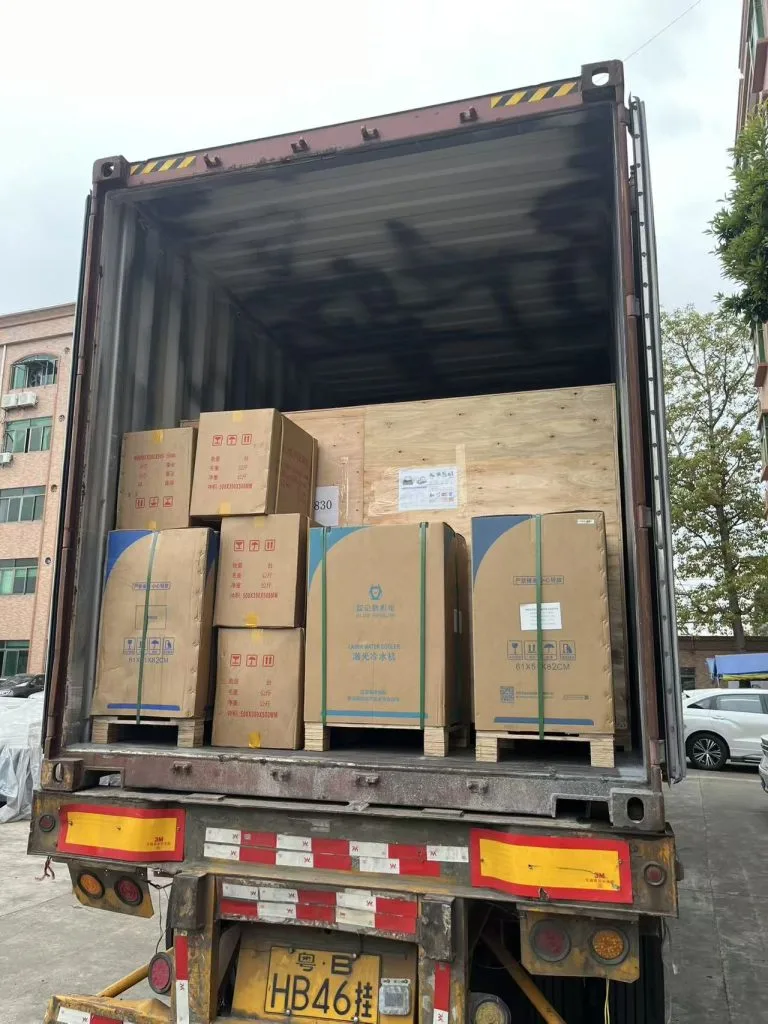
The water chillers maintain stable cooling for the CO₂ laser source. The fabric feeders support controlled unwinding and material movement for rolled textiles, while the spare tubes and smaller components reduce the risk of avoidable delays when the equipment reaches the customer’s factory.
Vietnam Truck 2: Additional DF1830 Panoramic Cutters
The second Vietnam-bound truck contained approximately six additional DF1830 panoramic laser cutting machines. These units use an 1800 × 3000 mm working area and are suited to wide-format fabric cutting where nesting, continuous roll feeding, and efficient use of the cutting table matter.
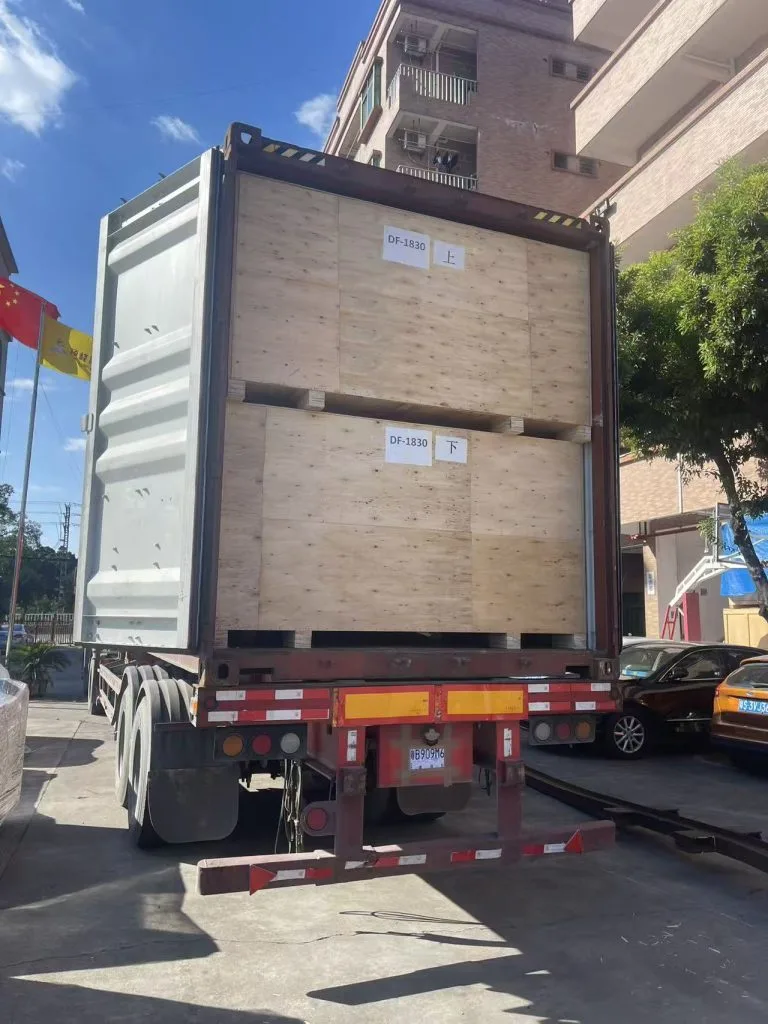
The DF1830 model labels and top/bottom markings are visible on the export cases. Splitting the Vietnam order across two trucks made it easier to distribute weight and place the equipment according to the receiving factory’s unloading plan.
India’s Two Truckloads: Four LX-1916 Panoramic Cutters
The two India-bound truckloads show four LX-1916 panoramic laser cutting machines in total and a separate parts crate. The LX-1916 has a 1900 × 1600 mm working area, making it suitable for wide fabric formats that require a shorter longitudinal footprint.
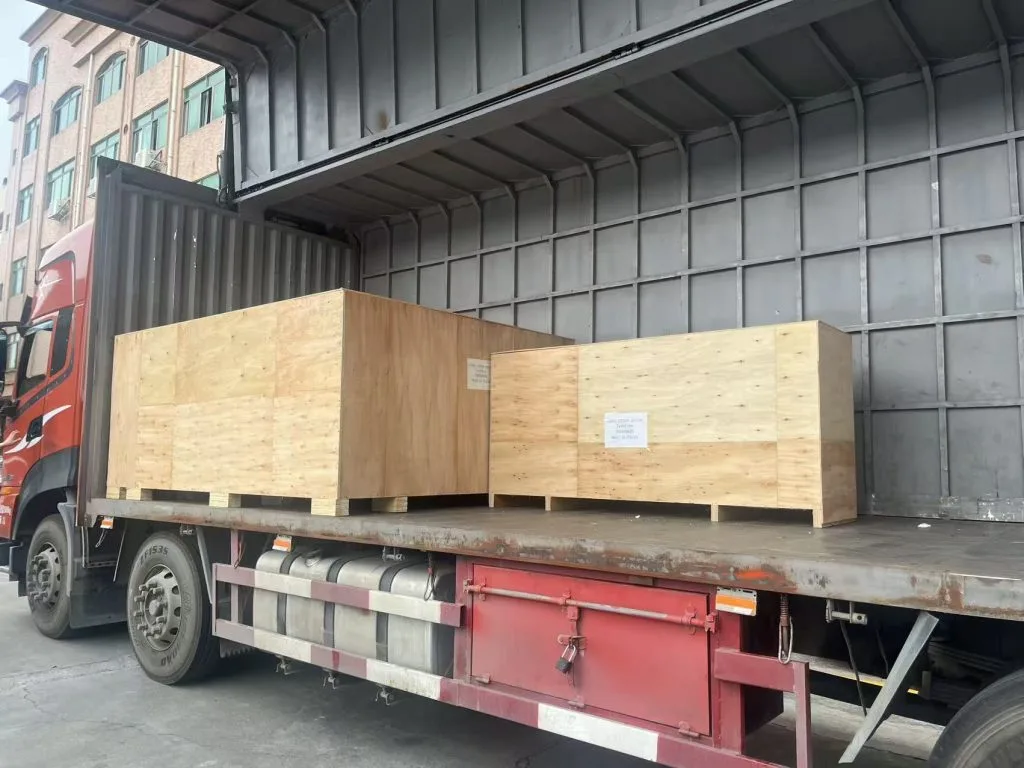
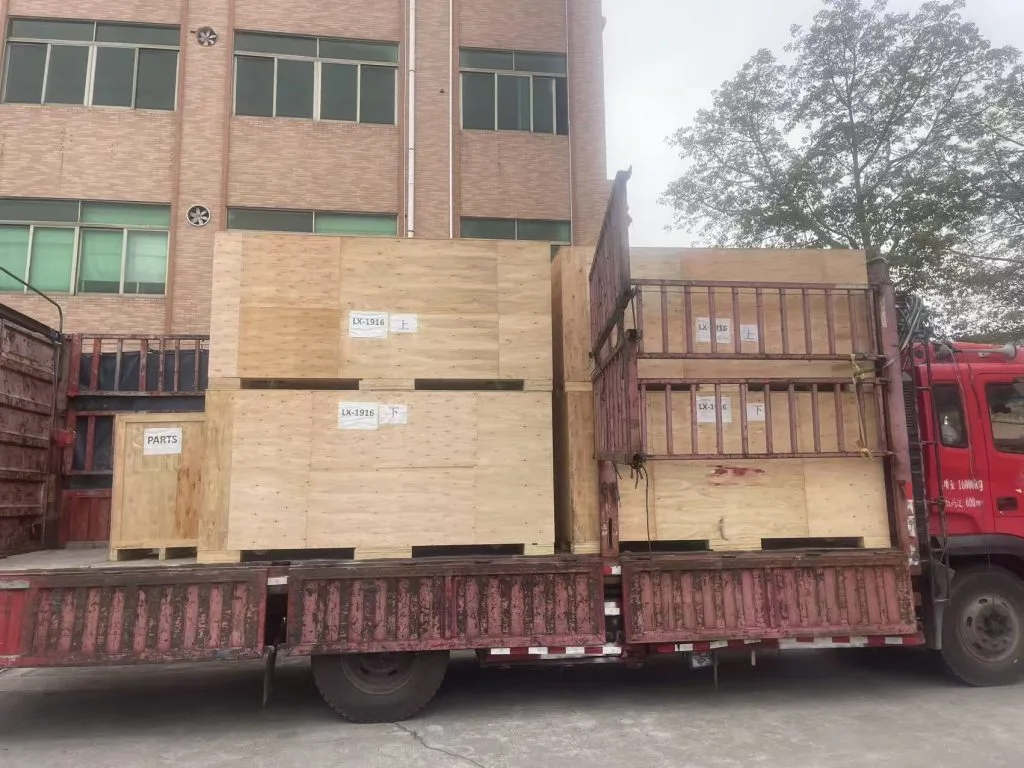
The LX-1916 cases are clearly labeled, and the dedicated “PARTS” crate keeps smaller accessories separate from the main machine boxes. This supports quantity reconciliation and prevents parts from being misplaced during unloading.
What the Four Truckloads Show
The photographs document cargo condition, wooden export packaging, model labels, and load arrangement across the four trucks at the time of loading. They also make it easier for the receiving team to compare the physical shipment against the packing list and transport documents.
These loading photos do not replace the final receiving inspection. After transport, the customer should check crate condition, confirm each machine model and serial number, count accessories, and inspect the equipment before moving it into the installation area.
Why Water Chillers and Fabric Feeders Ship with the Lasers
A complete fabric laser-cutting line includes more than the cutting gantry. Water chillers maintain the CO₂ laser source within its operating temperature range. Fabric feeding systems support controlled unwinding, tension, and continuous movement of rolled textiles. Laser tubes and spare components reduce dependence on a later consumables shipment.
The final equipment configuration should be based on the actual fabric, roll width, printed or unprinted status, layer count, target output, electrical capacity, extraction plan, and available floor space.
Pre-Shipment Checks for Panoramic Fabric Laser Cutters
Match the Machine Format to the Fabric
Compare the DF1830 or LX-1916 working area with the customer’s roll width, maximum cut-file dimensions, nesting allowance, and material-handling space.
Verify Fabric Samples
Polyester, cotton, coated textiles, laminates, and multi-layer stacks behave differently under a CO₂ laser. Cutting parameters and edge quality should be verified using samples from the actual production roll.
Prepare Cooling, Power, and Extraction Infrastructure
Before delivery, confirm water-chiller placement, electrical capacity, exhaust or filtration requirements, and airflow. The factory should also reserve sufficient access for unloading and installation.
Reconcile Models, Serial Numbers, and Accessories
The receiving team should match every machine, water chiller, fabric feeder, laser tube, and parts carton against the packing list before releasing the shipment to the installation area.
Related Product and Shipment Information
See the panoramic laser cutting machine specifications for model formats and working areas. For another mixed export loading example, read our four-shipment fabric equipment case.
Planning a Panoramic Laser Cutter Shipment?
Send your destination country, fabric type, roll width, cut-file dimensions, layer count, target output, and factory power requirements. Dingfeng can recommend DF1830, LX-1916, or another panoramic configuration and prepare the machine, cooling, feeding, and spare-parts scope for quotation.
Contact Dingfeng for a panoramic laser cutter quotation
Frequently Asked Questions
How many truckloads are shown in this shipment record?
Four trucks are shown: two DF1830-focused truckloads for Vietnam and two India-bound truckloads containing LX-1916 panoramic cutters and parts.
Which models were shipped to Vietnam?
The Vietnam-bound equipment included DF1830 panoramic laser cutting machines. The first truck also carried three water chillers, fabric feeding machines, laser tubes, and spare components.
Which models were shipped to India?
The two India-bound trucks show four LX-1916 panoramic laser cutting machines and a separately labeled parts crate.
Why are both DF1830 and LX-1916 shown?
The models use different working formats and serve different production layouts. DF1830 has an 1800 × 3000 mm working area, while LX-1916 has a 1900 × 1600 mm working area.